The michi rái of the Ava people
Sketch 020
Home > Blog A Musician's Log > Sketch 020
The Ava, a Guarani-speaking people of the Bolivian and Argentine lowlands, preserved a complex musical tradition shaped by Amazonian, Arawak, Andean, and colonial influences despite centuries of warfare, displacement, and missionary intervention. Closely tied to rituals such as the aréte guásu, their musical heritage includes drums, flutes, trumpets, whistles, idiophones, and the singular turumi violin, all generally handcrafted by the performers themselves and embedded in ceremonial, social, and symbolic practices linking music, dance, memory, sexuality, warfare, and relations between the living and the dead.
Ava membranophones are a family of male-played double-headed tubular drums generically known as angúa, including the angúa guásu, angúa rái, and michi rái, whose forms and distribution varied historically between Bolivia and Argentina.
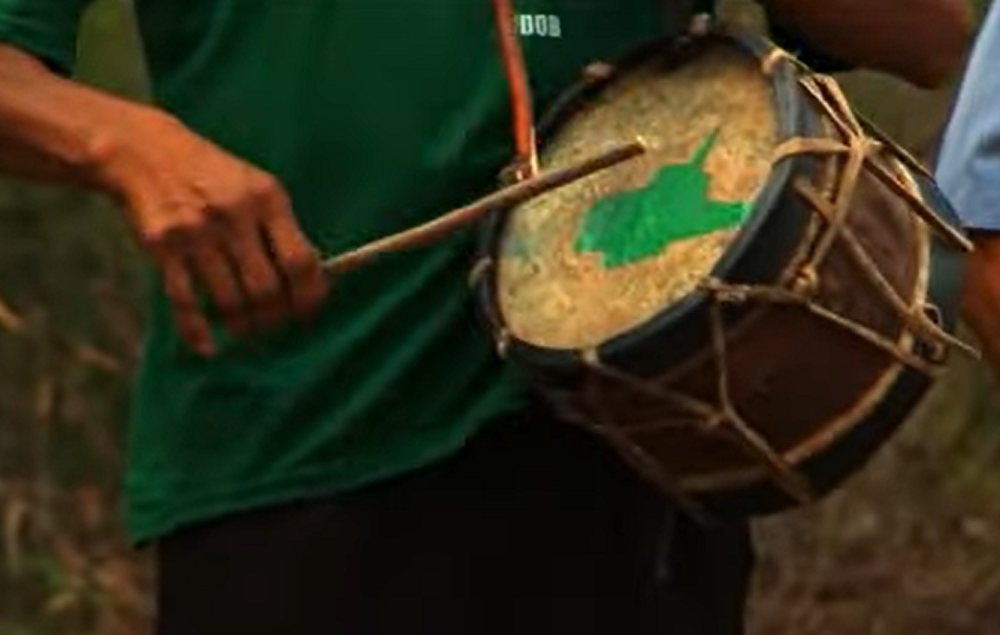
The michi rái is the smallest of the Ava drums: its name translates as "the youngest son."
The player hangs the small drum from his left wrist and strikes the drumhead — which is usually decorated with multicolored designs — with a pair of sticks. It is exclusively accompanied by a giant flute, the temímby guásu, during summer dances.
More information about these sound artifacts can be found in the free-access digital book Musical instruments of the Ava people, accessible through the "Digital books on music. Series 1" section.