Welcome

Instrumentarium is an independent research platform dedicated to the study and documentation of musical instruments, with particular attention to traditional instruments of Latin America. The project approaches instruments as knowledge systems and documentary objects — not only sound artifacts, but as material entities that embody histories of making, ecological territories, cultural memory, identities, and epistemologies.
Drawing on perspectives from organology / (ethno)musicology, museology, library and information science, archival studies, and documentary theory, Instrumentarium examines how instruments are understood, built, played, classified, described, recorded, and preserved, and how those processes shape what is remembered about musical traditions.
The site publishes research notes, essays, articles, books, and experimental forms of documentation devoted to the study of musical instruments and sound heritage. The contents of the site can be explored through the navigation menus at the top of the page or through the sections listed in the sidebar.
Blog A Musician's Log | The most recent note
Chimú Textiles
| Published August 05, 2026 |
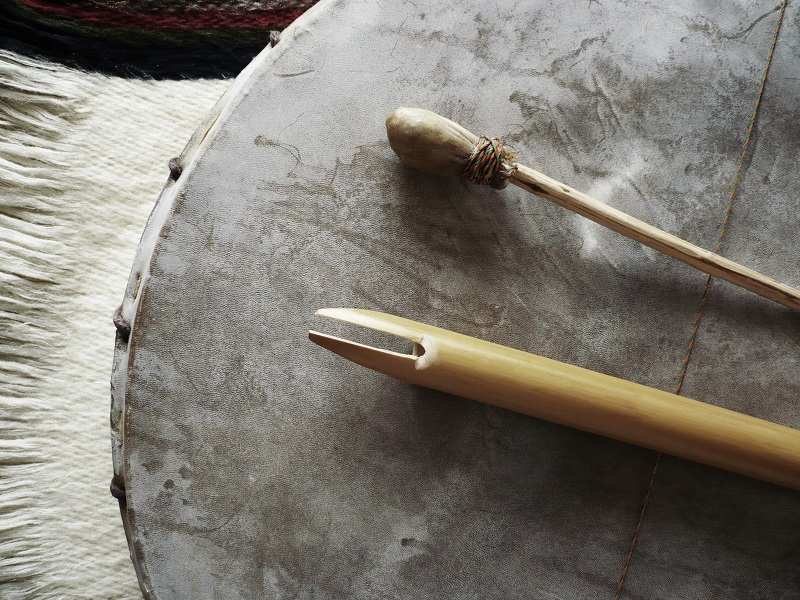
On Peru's north coast, Chimú images of musicians preserve more than instruments. A silver vessel depicting a panpipe player also records patterned textiles, ornaments, and dress that helped make the performer socially visible. This note explores the relationship between music, clothing, status, and ceremonial presentation, asking what happens when the sounding body is considered alongside the instrument it plays.
Blog A Musician's Log | The most recent sketch
The idiophones of the Ava people
| Published August 05, 2026 |
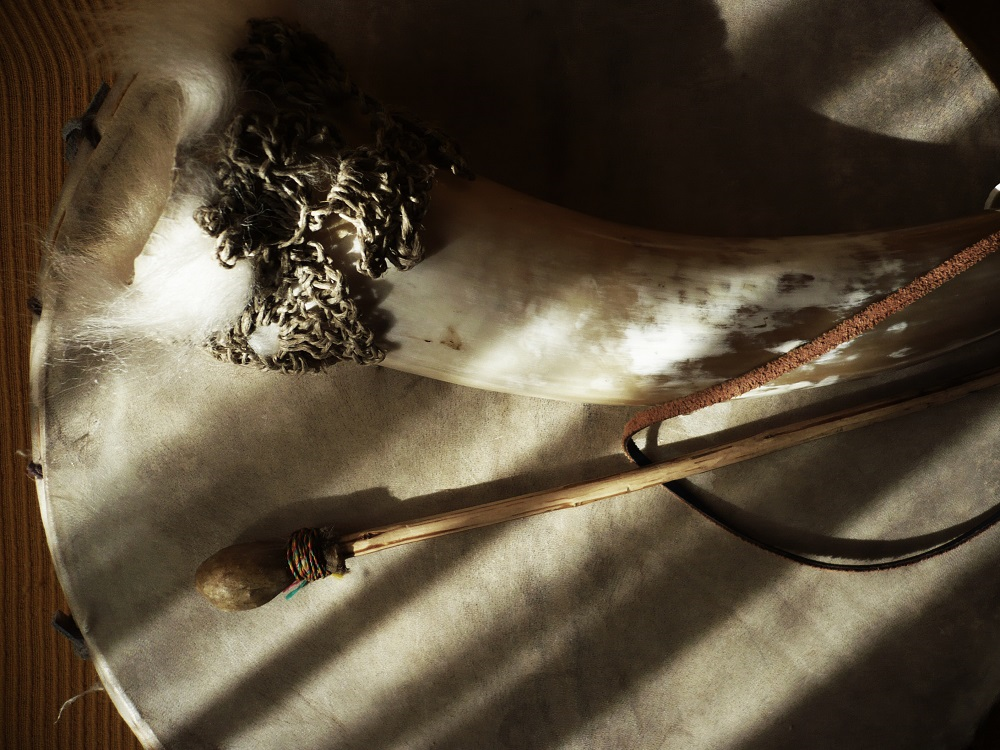
Among the Ava people of the Bolivian and Argentine lowlands, the yandúgua was a rhythm stick decorated with ostrich feathers, while the yvýra nambichái consisted of anklets made from vine seeds. This sketch examines their construction and their use in the aréte and other dance and ceremonial practices.
Articles

El erquencho y otros clarinetes idioglóticos
| Published April 11, 2025 |
Cuadernos de investigación musical, 17, enero-junio 2023, pp. 150-171.
[From the Spanish abstract] In his 1935 work on musical instruments among the indigenous peoples of South America, Karl Gustav Izikowitz noted the existence of a group of clarinets without fingering holes and idioglottal which he called "the Southern type." Curiously, he did not include in his list one of the few (if not the only) current survivors of that organological family: the erque or erquencho, an aerophone built and played in northwestern Argentina and southern Bolivia. Of relatively simple structure, it produces a hoarse, squeaky and gangly sound, in a limited range of notes, which does not prevent it from being very popular in its area of origin. Unfortunately, outside it is, even today, quite unknown. The article offers a review of the main characteristics of an almost lost family, and of a sound artifact almost invisible and scarcely performed outside its more traditional contexts.
All articles [in Spanish]
Books and other publications

Yanawan yuraqwan
Andean musical instruments in black and white
| Published April 11, 2025 |
Bogotá: Wayrachaki Editora, 2021.
Photo album with 15 black and white images accompanied by brief descriptions, introducing some of the most interesting traditional Andean musical instruments: quenas, pusi p'ias, sikus, toyos, rondadores, ocarinas, charangos, pingullos, pinkillos, waka pinkillos, waylla qhepas and wank'aras.