The kamacheña
Home > Digital books on music. Series 1 > The kamacheña
How to cite this work: Civallero, Edgardo (2025). The kamacheña. Archive edition. Bogota: El Zorro de Abajo Editora.
First edition, 2014. Second edition, 2015. Revised edition, 2021 (Wayrachaki Editora). Archive edition, 2025 (El Zorro de Abajo Editora).
Download in PDF.
This book offers a historical, organological, and ethnographic analysis of one of the most singular and least known flutes of the southern Andean region. Based on bibliographic documentation, field observations, and sound recordings, the text reconstructs the structure and uses of this traditional aerophone, highlighting its technical specificity and its role within the popular repertoire of the Argentine provinces of Jujuy and Salta, as well as southern Bolivia.
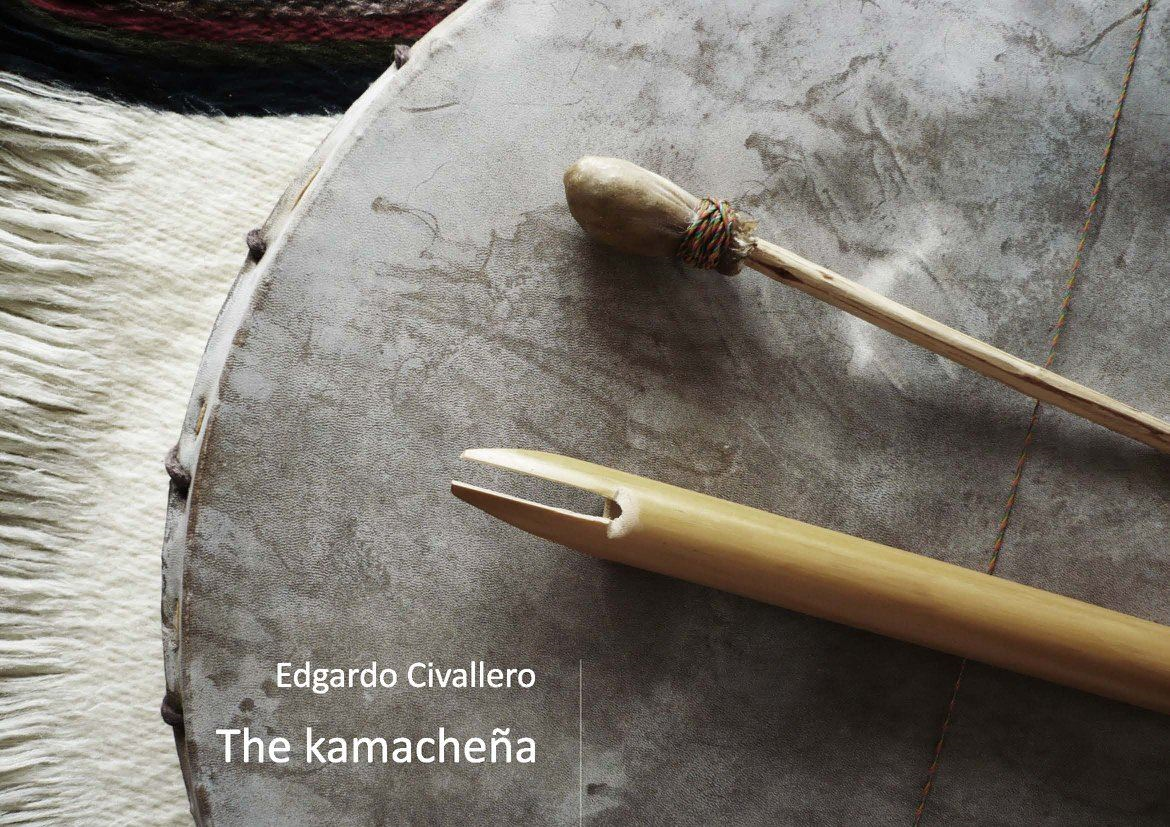
The work begins from a clear observation: the kamacheña has remained virtually invisible within Andean organological studies. Its restricted geographical range, its scarcely disseminated repertoire, and the technical difficulties it presents have contributed to its condition as a marginal and enigmatic instrument. The flute is described as a cane tube closed by a natural node at the distal end and open at the proximal end, where a mouthpiece is carved without a wind channel. Instead of the duct characteristic of fipple flutes, the kamacheña features a semicircular notch flanked by two lateral fins that the performer inserts into the mouth to secure the instrument and direct the airflow toward the edge. This structural feature, unique among Andean flutes, allows it to be played with one hand, while the other holds a caja, a small double-headed drum that provides rhythmic accompaniment to the melody.
The study details the ritual and seasonal context of the instrument. The flute appears in festivities such as those of Saint Roch (August), All Souls (November), and Carnival (February-March). Its sound marks the round dances or ruedas, in which a dozen dancers circle around the flutist-percussionist, and it also accompanies coplas sung by women, as well as instrumental tonadas or puntos that reproduce their melodies.
The book expands its analysis toward the flautillas chaquenses, probably derived from the kamacheña, used by peoples of the southern Chaco — Qom, Pilagá, Chorote, Nivaklé, and Wichí — showing how the technical model spread and diversified. These variants present a greater number of finger holes and abundant decoration, and although they lack ceremonial function, they retain their status as male instruments used in recreational contexts.
The text concludes that the survival of the kamacheña persists within specific rural settings, transmitted through oral tradition and empirical practice. The absence of phonographic and visual records, combined with institutional disinterest, has contributed to its invisibility within the South American musical landscape. However, its persistence in the hands of local musicians reveals a resilient and coherent cultural system, in which music continues to function as a language of identity and belonging.