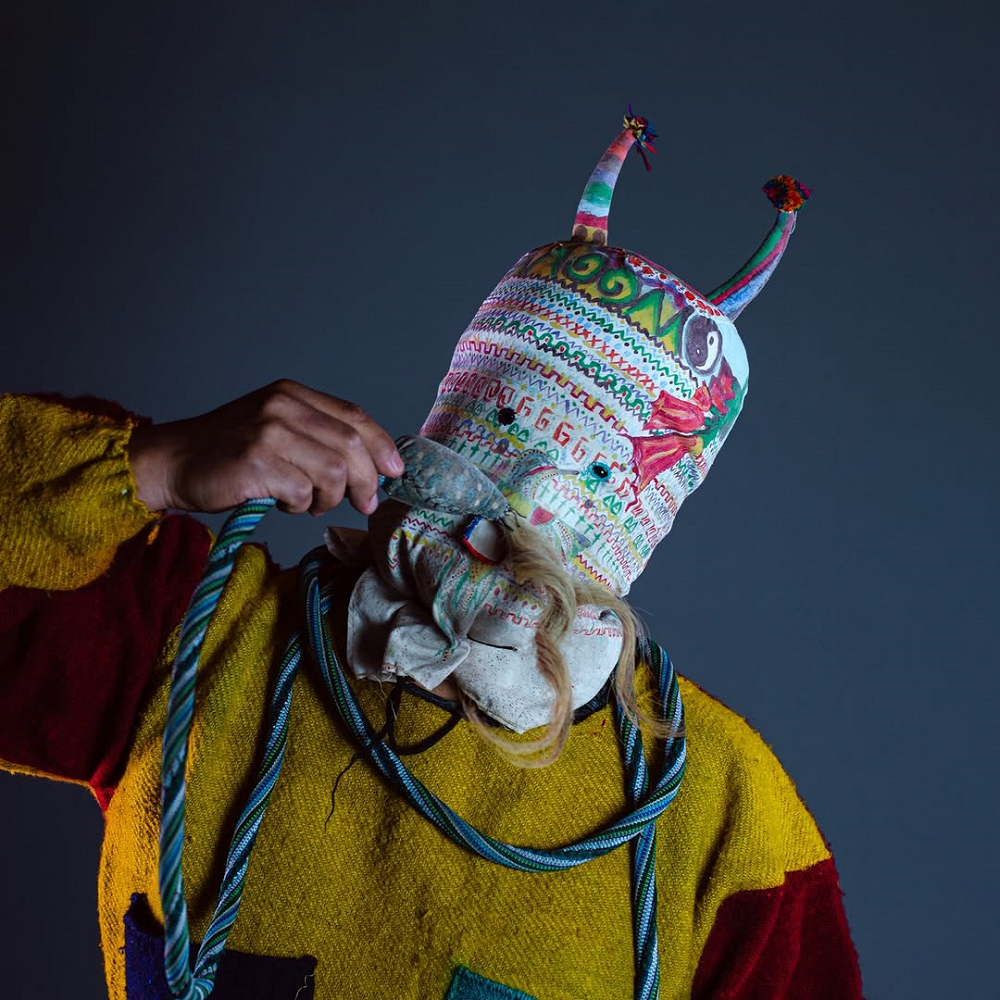
Sound in Saraguro Christmas
Note 014
Home > Blog A Musician's Log > Note 014
The Feast That Teaches Bodies to Sound
The Saraguro are a Quechua-speaking Indigenous people of southern Ecuador, with communities mainly in Loja and Zamora Chinchipe. Their history, language, agricultural life, ritual practice, Catholic influences, and community relations form a dense cultural world that cannot be reduced to "Andean folklore" or festive costume.
Within that world, Christmas becomes a ritual cycle around the Niño Dios, involving music, dance, food, costumes, devotional obligations, comic action, and a set of performers known as juguetes.
Sound gives that cycle part of its structure. It appears in rehearsal, role, movement, voice, comic speech, animal imitation, and public devotion.
Music helps build the ritual. The musicians prepare bodies. The sarawis sing devotion. The wikis joke and intervene. The ajas mark their presence through vocalized laughter. Animal figures move through their own music and choreography.
The feast is taught, rehearsed, and performed into sound.
The Tayta Maestro and the Architecture of Preparation
The central musical figure is the Tayta Maestro, the musician responsible for executing the music and preparing the choreographies of the feast. He works with an accompanying musician, called coteja or chulla. His role is not limited to playing. He prepares. He separates dances, songs, ritual forms, poetic scenes, and comic scenes into performable units.
That changes the meaning of music. Here, it is not an ornament placed beside ritual action. It is part of the machinery that makes ritual action possible. The Maestro teaches the feast how to happen.
This also means that Saraguro Christmas is not a spontaneous eruption of "tradition." The public event depends on rehearsal, memory, discipline, and coordination. The feast appears festive because it has already been worked.
Juguetes: Sound Assigned to Bodies
The performers of the Christmas choreography are called juguetes — Spanish for "toys." The word should not be flattened into the usual "toys." In this context, it refers to ritual performers: sarawis or arawis, wikis, ajas, animal figures such as the bear, lion, and tiger with their paileros or guardians, giants, and ushkus.
The interesting point is not that the feast contains many characters, but that each one carries a different sonic and bodily function.
The sarawis sing and dance devotion. They give the Niño Dios a vocal homage, not as abstract belief but as trained song, verse, and movement.
The wikis bring comic speech and picaresque action. Their sound is not music in the narrow sense. It is joking, interruption, verbal play, social handling. They produce order through laughter rather than solemn command.
The ajas, also called diablicos, are marked by strong costume´made of mosses and other vegetal materials, hierarchy, and voice. Their laugh-like vocalization, "aja, ja, ja," is not random noise. It is part of the characters identity. They are heard into presence.
So the feast distributes sound across roles. One body sings. Another jokes. Another vocalizes character. Another guards. Another dances. The result is not a soundtrack. It is a sonic division of ritual labor.
Animals, Keepers, and Choreographed Wildness
The animal figures make the structure even clearer. The bear, lion, and tiger appear with their paileros, or keepers. They do not simply "represent" animals. They imitate animal behavior through costume, parody, special choreography, and their own music.
Animality here is not just symbolism. It is performed under musical discipline. The animal is not released into chaos. It enters the feast through a controlled relation: animal and keeper, movement and melody, parody and devotion. The pailero frames the animal body. The music gives it timing. The choreography makes it recognizable.
The ushkus, representing vultures, push this even further. Their costumes are made with a carrizo frame and black cloth, and their dance imitates the bird's movements. That is a small but powerful mechanism: bird into frame, frame into costume, costume into movement, movement into music.
The local animal world is not merely mentioned. It is rebuilt as performable sound.
Rehearsal as Hidden Memory
One of the strongest details in the celebration is that the dances, songs, and music are learned during months of rehearsal. The public feast is only the visible edge of a longer process.
This matters because it prevents a lazy reading of the celebration as "living tradition" floating naturally through the community. Nothing here simply floats. It is prepared.
The Maestro trains the performers. The roles are assigned. The scenes are learned. The songs are repeated. The comic actions are shaped. The animal movements are disciplined. The feast becomes public only after memory has passed through bodies.
In that sense, rehearsal is not preliminary. It is ritual infrastructure.
What the Feast Makes Audible
The Saraguro Christmas feast shows that sound can organize ritual without being reduced to "music." Music is central, but it does not act alone. Sound also appears as song, comic speech, character vocalization, animal imitation, choreographic timing, and public movement.
The Tayta Maestro and his chulla hold the musical axis. The rest perform devotion, joy, identity... The feast is therefore not heard as a single musical event, but as a distribution of duties.
Sound tells each body what kind of ritual presence it must become.
Readings
- Chalán Guamán, Luis Aurelio (1994). La Celebración de la Navidad en Saraguro: sus personajes. In Linda Belote & Jim Belote (comp.) Los Saraguros: fiesta y ritualidad. Quito: Abya-Yala / Federación Interprovincial de Indígenas de Saraguro, pp. 27-61.
- Instituto Nacional de Patrimonio Cultural (Ecuador) (2012). Memoria oral del pueblo Saraguro. Loja, Ecuador: Gráficas Hernández Cía. Ltda.
- Samaniego López, Mariela Verónica et al. (2024). E-book ilustrado sobre la fiesta de Navidad en la cultura Saraguro. Chakiñan, Revista de Ciencias Sociales y Humanidades, 23, pp. 171-198.